
Lorraine’s Steady Care
Normal PeopleThis thread traces how Lorraine’s practical warmth gives Connell and Marianne a rare source of safety amid shame, family pressure, and uncertainty.
increasing Bearing strength in each event
 decreasing
Bearing strength in each eventdecreasingA Quiet Intervention

A Quiet Intervention
Seeing Marianne Clearly
When Connell visits Marianne’s house, Lorraine notices his impatience and reminds him that Marianne has a difficult time at school. Her concern is not grand or intrusive; she simply insists that he treat Marianne with ordinary kindness. That ordinary insistence offers a counterpoint to the contempt Marianne encounters elsewhere.
Lorraine also tells Connell that Marianne is sensitive, even when Marianne’s sharpness makes that quality easy to overlook. Connell resists the conversation, but his mother’s judgment stays with him. Lorraine recognizes that a person can be difficult to read without deserving rejection.
A Different Kind of Attention
Lorraine’s response matters because she does not treat Marianne as a joke or a problem to be solved. She speaks to her directly and warmly, making room for a relationship that is not governed by school status. That welcome foreshadows the steady support she later offers when the young people’s private choices begin to hurt them.
A Mother’s Recognition
A Mother’s Recognition
Reading the Situation
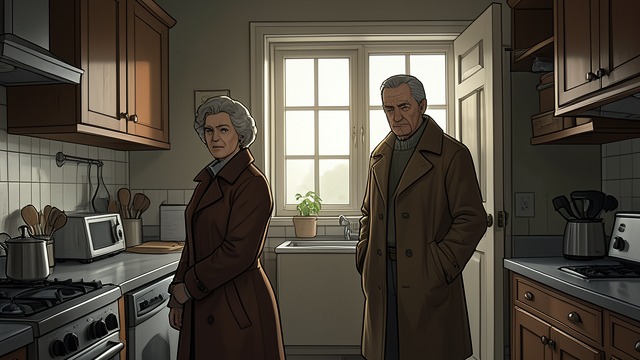
After the Debs fundraiser, Connell brings Marianne home and Lorraine finds them asleep together the next morning. She is amused, but not shocked: she had already inferred that Marianne was visiting when Connell’s mother was away. Her lightness makes the discovery feel less like exposure than an ordinary fact of family life.
Connell becomes defensive when Lorraine asks whether Marianne is his girlfriend. He wants privacy and resents the questions, while Lorraine is trying to understand what their secrecy means. Her curiosity also uncovers a question Connell has not considered: whether Marianne’s family might look down on him and his mother.
Drawing a Boundary
When Lorraine learns that Connell plans to take Rachel Moran to the Debs despite his ongoing private relationship with Marianne, her amusement disappears. She calls his behavior disgraceful and refuses to let him dismiss the situation as harmless. Her anger is a rare moment when she uses her closeness with Connell to challenge, rather than excuse, him.
A Door Left Open

A Door Left Open
Making Room for Marianne
After Marianne quits school and stops responding to Connell, Lorraine meets her while cleaning the Sheridan home. She asks whether Marianne is all right without demanding an explanation. When Marianne says she will remain at home to study, Lorraine accepts the decision without turning it into another interrogation.
Lorraine tells Marianne that Connell has been trying to contact her and then supports Marianne’s choice to ignore him. She says he does not deserve Marianne, recognizing that his treatment has hurt her even though he may not have intended the full damage. The response gives Marianne permission to protect herself.
Care Without Conditions
When Marianne asks that Connell no longer come into the house, Lorraine agrees and says she will bar him herself. Marianne immediately minimizes what happened, but Lorraine responds by embracing her rather than arguing over the details. Her care is not contingent on Marianne making a convincing case for needing it.
Practical Support

Practical Support
A Call for Help
After Connell is robbed and beaten, he calls Marianne because he has no money and knows her number. Lorraine is not at the apartment, but her earlier example of practical, nonjudgmental care helps define the response Connell receives. The immediate need is simple: get him somewhere safe and help him through the night.
Marianne offers more money than Connell thinks he needs, and her friends gather around him despite his bloody face and drunkenness. Their help is direct rather than sentimental. The episode recalls the way Lorraine tends to express affection: by noticing what is needed and doing something useful.
The Shape of Belonging
Connell is embarrassed by dependency and by the social distance between himself and Marianne’s friends. Yet the crisis temporarily makes care more important than status. The support he receives shows that his ties to others are not limited to his ability to appear competent or self-sufficient.
The Best Decision

The Best Decision
A Question About the Past
In the quiet after Marianne leaves, Connell asks Lorraine whether she regrets having him. The question exposes a fear he has carried beneath his more immediate anxieties: that his needs have cost his mother the life she might otherwise have had. Lorraine hears the pain behind the question and answers without hesitation.
She tells him that having a baby was the best decision she ever made and that she loves him more than anything. Her answer is not an attempt to solve every difficulty in his life. It gives him a dependable truth about the relationship that has shaped his sense of being cared for.
Reassurance, Not Rescue
Connell says he loves her too. The exchange is brief and unadorned, but its emotional force comes from the history of their mutual loyalty. Lorraine cannot remove his uncertainty about Marianne or the future; she can remind him that he is wanted and loved.
Her reassurance completes a pattern visible from the beginning: she offers affection without making Connell earn it through achievement or social approval. That steadiness remains one of the novel’s quiet counterweights to shame and isolation.
January 2011
April 2011, after the Debs fundraiser
August 2011, after Marianne leaves school
Late 2013, after Connell is mugged
February 2015
